Sponsored LinkedIn post
A dedicated post to introduce your brand to my audience.
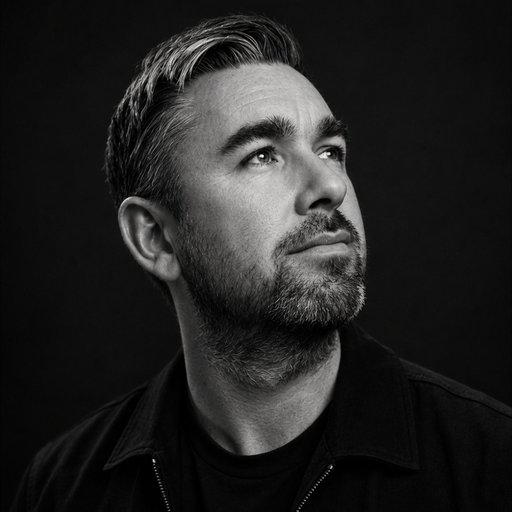
Senior Product Designer @ Thinkmill
Companies pay Paul to write a post about their product on LinkedIn.
This page is where they book it. Below: Paul's audience, recent posts and price. Naano, the platform behind this page, handles the brief, your approval of the post and the payment.
€250per post, fixed price
You approve the post before it goes live
Looking for Paul? View LinkedIn profileA creator yourself? Create your own page
Fractional Product Design Lead | Fintech, payments, design systems | 15+ years shipping products people trust
15+ years designing products for fintech, payments, and banking. Cash App. Afterpay. Payap. Centrapay. One question has driven all of it: how do you make something complex feel simple enough that people trust it? That's what got me into design. Not the tools, but the psychology. Why people hesitate, why they abandon a flow, why one screen feels safe and another feels off. I've always been more interested in the decision than the interface. These days I work as a fractional product design lead, embedding with growth-stage teams and founders to ship faster and make better decisions. I also advise early-stage founders through Ministry of Awesome on design, product, and getting to market. I use AI every day, but it doesn't define me. And please don't call me "AI-native." I hate that phrase. What that looks like in practice: → Product strategy and design leadership for teams without a senior design hire → Design systems and UX strategy that scale with you → Rapid prototyping, from rough idea to testable concept in hours → Founder advisory on design problems, product direction, and GTM I also share what I've learnt across 15 years of designing products right here on LinkedIn and through my newsletter. If you're early in your design career and want clarity, I've been where you are. Whether you're building a product and need design help, or you're a designer figuring out your next move, let's talk → 🤙 https://calendly.com/design-pauljosborn/ 🌐 www.pauljosborn.com
Public LinkedIn data · Sep 18, 2026
Paul Osborn
Most design teams obsess over the happy path. Designing fintech products across Cash App, Afterpay, and Centrapay taught me a pretty clear lesson. 90% of user trust is decided when a transaction fails, not when it succeeds. When money leaves an account and a spinner hangs indefinitely, nobody cares about clean UI. People immediately panic about whether their payment went through, whether they just lost money, or if tapping again will charge them twice. Error screens, network timeouts, and pending states are where the real psychology happens. When an app goes quiet or drops a generic error modal, the trust you spent months building vanishes in seconds. Designing for failure can't be an edge case you polish at the end of a sprint. In financial products, clarity during the worst-case scenario is the entire experience. I'm curious how other product teams handle this. How much time do you actually spend on broken states compared to the happy path?
Paul Osborn
In 'Ralph Breaks the Internet', there's a scene that completely changed how I look at design systems. Ralph and Vanellope get turned into tiny data packets shooting through glass tubes. Then the camera pulls all the way back, revealing a sprawling neon metropolis of towering search engines and infinite traffic. A microscopic speck inside an enormous, living city. I got caught in that exact zoom lens trap this week. I spent an hour tweaking a tiny status badge component. Padding dialled in, typography crisp, hover states looking lovely on a clean canvas. *I convinced myself I was doing deep craft, when I was really just avoiding thinking about the gnarly edge cases. Then we zoomed all the way out. That tiny badge didn't just live in isolation. It had to survive across four different product domains, handle weird localized currencies, fit inside tight table rows, and make sense when an API call failed. In isolation, building the component was trivial. Understanding its ripple effects across the entire ecosystem was massive. Most designers get stuck in one extreme: Either obsessing over auto-layout padding on a single frame while ignoring how the feature fits into the actual product... Or sketching 30,000-foot vision decks while the tap-level experience feels completely broken. The real craft isn't choosing between the speck of data or the skyline. It's having the stomach to toggle between both without losing your mind 😆 How much time did you spend this week fixing a 'simple' component that blew up when you tested it across real product use cases? Also, what's the smallest UI component that caused the biggest headache in your codebase? Drop it in the comments 🤘
Paul Osborn
I spend all week mapping out cognitive friction for other people. Then the moment I hit a tiny bit of friction in my own work, I reflex-check LinkedIn 27 times before lunch. It's a bit embarrassing, honestly. Our entire job as designers is understanding psychology. We study habit loops. We know that the exact second a user feels confused or stuck, their instinct is to abandon the flow. We spend hours designing seamless user journeys to keep people on rails. Yet in our own workflow, the slightest bit of mental resistance becomes an emergency exit. Stuck on a tricky layout? Open a new tab. Unsure how to structure an edge case? Check Slack. Need to think through messy logic? Suddenly my inbox needs organising. We don't tab away because we're lazy. We tab away because sitting with an unsolved problem is deeply uncomfortable. And we've engineered the cleanest distraction loops right next to our work. The irony isn't lost on me. How many times did you reflex-tab away from a hard problem today?
Choose a format for your next LinkedIn collaboration.
A dedicated post to introduce your brand to my audience.
Your collaboration, managed on Naano
How does this price compare? B2B creator rates 2026
Based on 31 people who reacted to or commented on my posts. Percentages use the profiles that could be classified.
Based on 31 people who reacted to or commented on my posts. Percentages use the profiles that could be classified.
Based on 31 people who reacted to or commented on my posts. Percentages use the profiles that could be classified.
Storefront by Naano · Create yours
Paul Osborn is a B2B LinkedIn creator based in New Zealand with 1,774 followers, posting about AI, Creative, and Fintech. On Naano, one sponsored LinkedIn post by Paul Osborn costs €250, a fixed price per post.
The Naano team casts the creators, writes the briefs, reviews every draft with you and reports results per creator. You approve the shortlist and every draft.