Sponsored LinkedIn post
A dedicated post to introduce your brand to my audience.
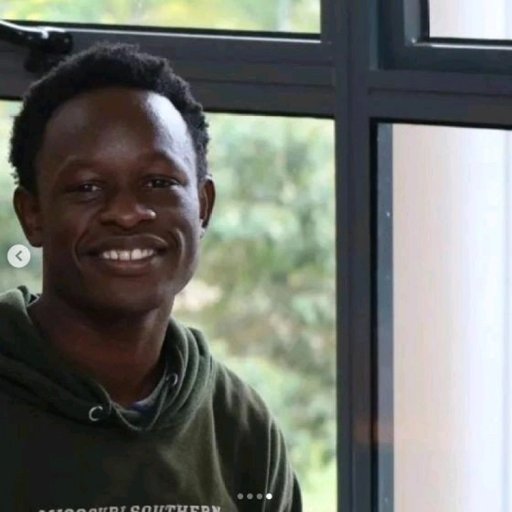
Business Development :B2B partnership Acquisition @ Velocity
Companies pay Emmanuel to write a post about their product on LinkedIn.
This page is where they book it. Below: Emmanuel's audience, recent posts and price. Naano, the platform behind this page, handles the brief, your approval of the post and the payment.
€125per post, fixed price
You approve the post before it goes live
Looking for Emmanuel? View LinkedIn profileA creator yourself? Create your own page
Building a B2B/B2C German learning platform for Africa.plans to launch a physical academy. Connecting certified Kenyan German speakers with employers in Pflege, Logistics, Cruise & Hospitality.
As a Partnerships Marketing Specialist at Idea Hub Africa, I collaborate with entrepreneurs from African universities to refine market-disruptive ideas, develop prototypes, and connect them with investors to secure funding. My work focuses on building corporate partnerships, activating alliances, and driving impactful collaborations that support innovation and sustainable growth. Currently pursuing a Bachelor of Education in German at Universität Paderborn, I aim to leverage my language and education background in fostering global partnerships. Passionate about enabling entrepreneurs to succeed, I am dedicated to empowering talent and creating opportunities for market transformation across Africa.
Public LinkedIn data · Sep 17, 2026
Emmanuel Nyongesa
Earlier this year, my lecturer, Herr Heimlich, introduced me to two students who had come from Germany to Kenya. They were working in two schools in Nairobi, looking at how #German is taught in Kenyan primary and secondary schools. One school had no German at all. The other, St George’s Girls High School, already taught it. When I later went to Germany, I reconnected with their coordinator Laura Liefer That experience has stayed with me because I have spent the last year thinking about the other side of the same problem: Germany’s shortage of skilled workers and the growing business around recruiting Africans to fill it. Germany needs workers. But I don't think its answer is simply to keep lowering the barriers to entry. A person can be brought to Germany and still struggle to work, communicate and stay in the profession that brought them there. The biggest barrier is still German. Today, we often wait until someone is already a nurse, engineer or other professional, then ask them to learn German as an adult sometimes in a year because they want to move. What happens if we start much earlier? A 13-year-old learning German doesn't need a visa, an employer or a migration plan. They just learn. Give them six or eight years, and German could become part of their education rather than a last-minute requirement for leaving the country. I think this is where the next layer of Germany Africa labour migration could develop: schools, universities and employers working much further upstream. I also see the problem from the other side through Learn German Africa. If German is going to reach thousands of students, there simply won't be enough teachers. That is why I've been working around self-learning and technology not to replace teachers, but to make each teacher capable of reaching many more learners. The recruitment market is built around people who are ready for Germany today. I’m more interested in the people who could be ready five or ten years from now. And perhaps that starts with something as simple as introducing German to a child in a Kenyan classroom.
Emmanuel Nyongesa
International Talent recruitment in Germany is pretty interesting. The fair recruitment model is meant to provide seamless recruitment and avoid extractive measures from agents. However, I think the extractive measures will continue to be propagated by agencies to the extent where some employers don't want to abide by the fair recruitment model. Under the fair recruitment model, employers pay while candidates don't pay. However, in Germany, most employers are not willing to pay. This is due to the bad precedent of trying to fill a position and ending up losing more money if the talent leaves. I had a discussion with Christoph Ludwig about this. Christoph says employers have a choice to pay around €8,000 for recruitment of international talent, where if they don't fill the position, they could lose seven times more. To be fair, almost one year in this space, and I think fair recruitment is by far only a theory and works on paper only. Employers don't want to pay. Most are willing to pay for flights and visas but not the agency, which is really problematic since agencies then don't benefit anything. They therefore go on to charge the candidates. When I proposed to an employer who was not willing to pay that I could use the deferred model, where candidates will pay me back over a couple of months in instalments through the salaries they earn, they said those are hidden fees and it's equivalent to human trafficking. So who pays for the service fee? The German healthcare sector is tired of agencies, but agencies are a necessity. Too much legwork goes around visas and everything else, and it requires an agency. I am really interested to have talks with healthcare employers and agencies and understand how they go about the fair recruitment model. Because there is a real gap between the fair recruitment model as it is presented and how international recruitment actually works on the ground. #LabourMigration #Germany #InternationalTalent #HealthcareRecruitment #SkilledMigration #EthicalRecruitment #GermanyHealthcare #NursingMigration #TalentMobility #Recruitment
Emmanuel Nyongesa
For the vast majority of instances, I've noticed something interesting. Many German companies don't hire from Sub-Saharan Africa. At best, they recruit from North Africa: mostly Morocco, Tunisia, and Egypt. Beyond Africa, they recruit heavily from Brazil, Vietnam, and India. But when it comes to Sub-Saharan Africa, the pipeline is remarkably thin. To be fair, I understand why. Knowledge about labour migration reached much later in many Sub-Saharan African countries. Speaking for my own country, Kenya was on the WHO Health Workforce Support and Safeguards List until recently, making international recruitment more complicated. That history influenced employer behaviour. But I don't think that's the whole story.I also think many German employers simply haven't looked closely enough at what Sub-Saharan Africa has to offer. Here's why they should. First, the demand is undeniable. The intuition pump is simple: no one wants a patient in a hospital to die because there wasn't enough staff on duty. Germany's labour shortage isn't theoretical. It's here, and every vacant position matters. Second, you're not betting on an unknown. Kenya consistently ranks among Africa's strongest education systems. When you recruit from Kenya, you're not taking a leap of faith. You're hiring people who have already proven they can compete. Third, Germany itself is changing. Black communities in Germany are growing. The country is becoming more diverse, and organisations that reflect that diversity will become more attractive- not just to employees, but to customers as well. Finally, language. This isn't about putting down North Africa. It isn't. But English is an official language in Kenya. In my experience living in Germany, most people would rather communicate in English than French whenever German isn't an option. That makes Kenya's workforce particularly well positioned for international collaboration while learning German. This isn't an argument against Morocco, Tunisia, Egypt, India, or Brazil. It's an argument for widening the circle. If you're a German employer who's only been recruiting from the same international markets, maybe it's time to give Sub-Saharan Africa a genuine opportunity. At Learn German Africa, we're building that bridge. We have candidates preparing for careers as nurses, physiotherapists, and Ausbildung placements in hospitality and logistics. If you're willing to look where others haven't, let's talk. Contact [email protected] or message me at +495511052561 #Recruitment #TalentAcquisition #InternationalRecruitment #SkilledMigration #LabourMobility #WorkforceDevelopment #Germany #Kenya #Africa #SubSaharanAfrica #EastAfrica #DeutschlandJobs #FachkräfteAusDemAusland #Pflege #Nursing #Healthcare #Physiotherapy #Hospitality #Logistics #Ausbildung #FachkräfteMangel #Krankenpflege #GlobalTalent #TalentMobility #MigrationPolicy #EthicalRecruitment #InternationalTalent #Fachkräfteeinwanderung
Choose a format for your next LinkedIn collaboration.
A dedicated post to introduce your brand to my audience.
Your collaboration, managed on Naano
How does this price compare? B2B creator rates 2026
Based on 53 people who reacted to or commented on my posts. Percentages use the profiles that could be classified.
Based on 53 people who reacted to or commented on my posts. Percentages use the profiles that could be classified.
Based on 53 people who reacted to or commented on my posts. Percentages use the profiles that could be classified.
Storefront by Naano · Create yours
Emmanuel Nyongesa is a B2B LinkedIn creator based in Kenya with 5,381 followers, posting about Growth / GTM, Agencies / Consulting, and Marketing. On Naano, one sponsored LinkedIn post by Emmanuel Nyongesa costs €125, a fixed price per post.
The Naano team casts the creators, writes the briefs, reviews every draft with you and reports results per creator. You approve the shortlist and every draft.