Sponsored LinkedIn post
A dedicated post to introduce your brand to my audience.
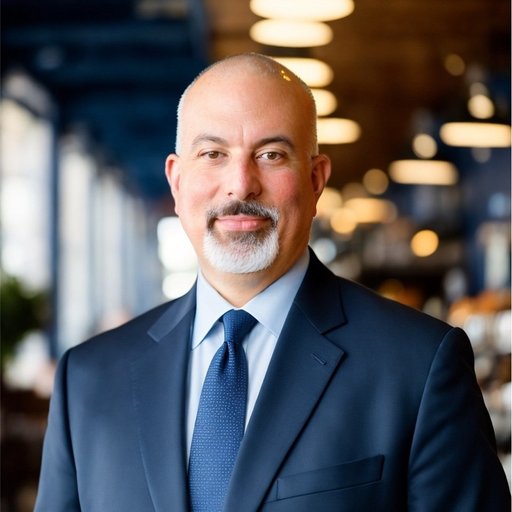
Fractional CISO/CSO @ vSecurityAdvisor
Companies pay Harris to write a post about their product on LinkedIn.
This page is where they book it. Below: Harris's audience, recent posts and price. Naano, the platform behind this page, handles the brief, your approval of the post and the payment.
€250per post, fixed price
You approve the post before it goes live
Looking for Harris? View LinkedIn profileA creator yourself? Create your own page
Chief Information Security Officer / Chief Security Officer | Global Security Advisor |Cyber Resilience| Cyber & AI Risk, Governance & Compliance Executive | Trusted Advisor to Boards & CEOs
A seasoned cybersecurity and risk management professional with over 30 years of experience, currently serving as a Fractional CISO/CSO. Specializing in cybersecurity programs, GRC, privacy programs, AI governance, and threat intelligence, I provide strategic advisory to organizations across sectors including manufacturing, retail, healthcare, and education. My work addresses critical areas such as information protection strategies, compliance readiness (e.g., ISO27001 and SOC2), and business-risk mitigation. As a trusted advisor, I collaborate with leadership teams to implement actionable and pragmatic security frameworks, aligning technical risk with business objectives. My expertise extends to advising on guardrails for AI and advanced technologies, security operations optimization, and regulatory concerns. Passionate about enabling organizations to remain resilient and future-ready, I focus on building adaptive programs that safeguard data, people, and reputation while fostering growth.
My most engaged audience
59% Founder / C-level · 32% Engineering / Data
From 186 people who reacted to or commented on my posts
Public LinkedIn data · Aug 25, 2026
Harris D. Schwartz
We don't have a cybersecurity problem. We have a decision-making problem. Most organizations have more security information than ever before. Threat intelligence. Vulnerability reports. Security alerts. Third-party assessments. Regulatory requirements. AI risks. Cloud exposure. The problem isn't a lack of information. It's what happens next. Who decides? What gets prioritized? What risk can the business accept? What needs immediate action? And who is accountable for the decision? I've worked with organizations where security teams had identified the risks months earlier. The problem wasn't visibility. The problem was that nobody could translate the information into a business decision. That's where cybersecurity leadership needs to evolve. A CISO shouldn't be expected to eliminate every risk. That's impossible. The role is to help the organization understand risk well enough to make informed decisions. That requires context. A critical vulnerability on a development server isn't necessarily the same risk as a moderate vulnerability on a system supporting a critical business process. A vendor with access to sensitive data isn't the same risk as a vendor with access to public information. An AI application isn't automatically dangerous. The risk depends on what it can access, how it's being used, and what controls surround it. Context changes the decision. That's why mature organizations are moving from: ❌ More alerts ❌ More reports ❌ More dashboards ❌ More risk scores Toward: ✓ Better context ✓ Clear ownership ✓ Business impact ✓ Defined risk appetite ✓ Faster decisions The goal isn't to fix everything. The goal is to understand what matters most and act accordingly. I believe the strongest security organizations operate as decision-support functions. They don't simply tell executives: "Here's your risk." They explain: "Here's what could happen, here's what it could cost, here's what we can do about it, and here's the decision we need to make." That's a very different conversation. And it's one that moves cybersecurity from a technical function into a true business discipline. The question I would ask every leadership team is: If we identified a significant cyber risk tomorrow, could we make a clear business decision about it within hours—not weeks? If the answer is no, you may not have a cybersecurity problem. You may have a decision-making problem. What gets in the way of fast cyber risk decisions in your organization: information, ownership, priorities, or risk appetite? #CyberSecurity #CyberResilience #Leadership #RiskManagement #CISO #Governance #CyberRisk #BusinessLeadership #DecisionMaking #InformationSecurity
Harris D. Schwartz
In April, something I had worked on for a long time finally became real. I published my first novel, The Homefront Directive. And now, just a few months later, I'm incredibly excited to share another milestone: The book now has international distribution. 🌎📚 What started as an idea, then became a manuscript, is now available to readers across the United States, United Kingdom, Europe, Australia, New Zealand, India, and international markets. That is a pretty incredible feeling. The Homefront Directive is a taut thriller exploring a very different side of the my professional background. The story brings together: → Domestic terrorism → Insider threats → Disgruntled employees → Intelligence operations → An investigation where the threat may be much closer than anyone realizes At the heart of the story is an intelligence agency tasked with uncovering what is really happening—and determining just how far the threat extends. I wanted to explore the uncomfortable intersection between insider threat, loyalty, intelligence, and the vulnerabilities that exist within organizations and communities. Writing fiction gave me the opportunity to take some of those concepts and put them into a completely different setting. There is something uniquely rewarding about seeing an idea that lived in your head become a physical book—and then watching it find its way onto bookshelves and into the hands of readers around the world. The book is now available through retailers including Barnes & Noble, Books-A-Million, Walmart, Bookshop.org, Waterstones, Blackwell's, bol.com, Hugendubel, Orell Füssli, Adlibris, Bokus, Saxo, LaFeltrinelli, Bookscape, The Nile, Fishpond, AbeBooks, and many others. I'll share the full list of retailers and regional links in the comments. To everyone who has already bought the book, recommended it, shared it, reviewed it, or encouraged me throughout the process: Thank you. A book starts with one person writing the words. But it becomes a story when other people read them. I'm excited to see where The Homefront Directive goes next. And maybe the biggest question is the one every good thriller should leave you asking: How well do you really know the people around you? #TheHomefrontDirective #PoliticalThriller #Thriller #Suspense #DomesticTerrorism #InsiderThreat #Espionage #Intelligence #CyberThriller #NewBook #Author #BookLaunch #Fiction
Harris D. Schwartz
We spent years worrying about employees putting sensitive data into AI. Now we need to start asking a much bigger question: What happens when AI can actually do something? AI is moving beyond chatbots and copilots. We're seeing AI systems that can: → Make decisions → Execute workflows → Write and deploy code → Access systems → Interact with customers → Trigger transactions → Change configurations → Act with limited human intervention That's a very different risk conversation. The question is no longer simply: "What information is the AI using?" It's: "What authority have we given it?" Think about the questions organizations need to answer: ✓ What can the AI access? ✓ What decisions can it make? ✓ What actions can it take without human approval? ✓ Who monitors those actions? ✓ Can we explain why it made a decision? ✓ Can we stop it quickly? ✓ Who owns the risk when it gets something wrong? And perhaps the most important question: Do we have a kill switch? AI governance cannot stop at policies about acceptable use. If an AI system can take action, governance needs to address authority, accountability, monitoring, testing, and resilience. This is where AI becomes an operational risk. An AI failure isn't necessarily just a bad answer. It could become: A financial loss. A customer-impacting event. A regulatory issue. A security incident. An operational disruption. Or a business continuity event. The organizations that get this right won't be the ones that simply deploy AI the fastest. They'll be the ones that understand what they're giving AI permission to do—and build guardrails around it. We've spent decades building controls around people and systems. Now we need to build them around machines that can make decisions and take action. The future of AI governance isn't just: "Can AI do this?" It's: "Should AI be allowed to do this—and under what conditions?" That's a very different question. And it's one every executive team needs to start asking now. If an AI agent made a decision tomorrow that could materially impact your business, could you stop it? #AI #AIGovernance #CyberSecurity #CyberResilience #RiskManagement #Leadership #ResponsibleAI #CISO #TechnologyLeadership #ArtificialIntelligence
Choose a format for your next LinkedIn collaboration.
A dedicated post to introduce your brand to my audience.
Your collaboration, managed on Naano
How does this price compare? B2B creator rates 2026
Based on 186 people who reacted to or commented on my posts. Percentages use the profiles that could be classified.
Based on 186 people who reacted to or commented on my posts. Percentages use the profiles that could be classified.
Based on 186 people who reacted to or commented on my posts. Percentages use the profiles that could be classified.
Based on 186 people who reacted to or commented on my posts. Percentages use the profiles that could be classified.
Storefront by Naano · Create yours
Harris D. Schwartz is a B2B LinkedIn creator based in the United States with 12,499 followers, posting about Cybersecurity, AI, and Growth / GTM. On Naano, one sponsored LinkedIn post by Harris D. Schwartz costs €250, a fixed price per post.
The Naano team casts the creators, writes the briefs, reviews every draft with you and reports results per creator. You approve the shortlist and every draft.