Sponsored LinkedIn post
A dedicated post to introduce your brand to my audience.
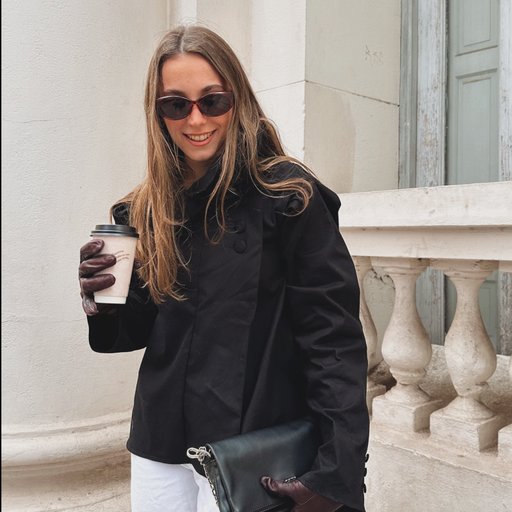
Founder & Consumer Psychologist @ Concept 27
Companies pay Lourdes to write a post about their product on LinkedIn.
This page is where they book it. Below: Lourdes's audience, recent posts and price. Naano, the platform behind this page, handles the brief, your approval of the post and the payment.
€938per post, fixed price
You approve the post before it goes live
Looking for Lourdes? View LinkedIn profileA creator yourself? Create your own page
Consumer Psychology & Cultural Strategy Consultant | Fashion, Luxury & Sports | Executive Brand Positioning
Why do people desire certain brands, follow certain creators and turn products into symbols of identity? That’s the question behind my work. I’m a consumer psychologist and founder of Concept 27, working at the intersection of consumer psychology, culture and brand strategy across fashion, luxury, sport and entertainment. I analyse what happens beyond the product: the cultural codes, emotions, identities, communities and social meanings that make people care about a brand in the first place. Through Concept 27, I work with brands and organisations on consumer insight, cultural intelligence, strategic analysis and brand relevance. I also publish Style Code, where I analyse the ideas shaping fashion, luxury, sport, media and culture — not simply what happened, but why it matters. My work sits somewhere between psychology, culture and strategy. Because understanding what people buy is interesting. Understanding why they want to belong is much more useful. If you’re working on a brand, campaign, product or cultural question and want to understand how consumers might perceive it, I’d be happy to explore it with you. For editorial collaborations, brand partnerships, events and creator opportunities: [email removed]
Public LinkedIn data · Aug 31, 2026
Lourdes Bailone
Some goodbyes feel bigger than football. Lionel Messi announced his retirement from the Argentina national team today, and I keep thinking about how strange it will be not to see him there. I don’t know Argentine football without Messi. I grew up watching him wear that shirt, through the losses, the criticism, the frustration, the years of waiting and, eventually, the most beautiful ending we could have imagined. But I think what Messi leaves behind goes far beyond football. He changed the way an entire generation understood leadership. He showed us that leadership doesn’t always have to be loud, dominant or charismatic. Sometimes, it looks like consistency. Like showing up again after failure. Like continuing to work when everyone tells you that your moment has already passed. He also taught us something that is easy to forget when we are impatient with our own lives: some dreams take longer than we expect, but that doesn’t make them less worth pursuing. Messi lost finals. He was criticised. He stepped away from the national team and came back. He kept trying, even when the outcome seemed to be telling him to stop. And years later, he lifted the trophy that so many people had already decided he would never win. For many of us, that story became more than football. It became a lesson in perseverance, patience and believing in something before there is any guarantee that it will happen. He showed us that failure doesn’t have to define the ending, that it is never too late to achieve a dream, and that sometimes the years of waiting are what make the final moment mean so much more. That’s why this goodbye feels so emotional. We are not only saying goodbye to a football player. We are saying goodbye to someone who became part of our childhood, our memories, our culture and, in many ways, our idea of what is possible. I don’t know what Argentine football will feel like without him. But I know that an entire generation will carry what he taught us for a very long time. Thank you, Leo, for teaching us to believe big, to keep going when things don’t go our way, and to trust that our moment can still come. Thank you for representing our country, for taking our flag around the world and for leaving Argentina at the highest place. You made us proud. Gracias por todo, Leo. 🇦🇷
Lourdes Bailone
The Art of Effortless Elegance. I’m excited to finally share my final project for MABIA — a project that allowed me to explore something that has been increasingly interesting to me: how a garment can communicate identity, create presence, and remain relevant beyond a season. I started with French Style as a point of departure, not as an aesthetic to replicate, but as a way of exploring a different approach to dressing: one where elegance comes from simplicity, authenticity and intention rather than excess. This became particularly relevant when thinking about fashion today. In an industry increasingly shaped by accelerated consumption and fast fashion, I wanted to explore the opposite question: What makes a garment worth keeping? From there, the blazer naturally became the central piece. Its history, versatility and ability to move between different identities made it the perfect starting point. Masculine and feminine. Structured and soft. Classic and contemporary. As part of the research, I looked at references such as Chanel and Yves Saint Laurent, whose work played an important role in reshaping the relationship between masculine and feminine codes in fashion and expanding the possibilities of the blazer. But the goal was never to reproduce those references. I wanted to build my own interpretation: a blazer that could adapt to different contexts, different moments and different ways of being worn, while maintaining its own identity. The project therefore became an exploration of authenticity, versatility, simplicity and durability — and of the idea that a timeless garment doesn’t necessarily need to be neutral or predictable. For me, elegance should not disguise the person wearing it. It should give her something she can make her own — something that allows her to feel like herself, only a little more confident. From research and moodboarding to sketching, material selection, construction and final production, this project gave me the opportunity to experience the entire process of turning a concept into a physical garment. And perhaps the most interesting part was realizing that designing a piece of clothing is not only about how it looks. It is also about how it makes someone feel, how it fits into their life, and whether they will still want to wear it years from now. Thank you to MABIA and especially to Martina Bianchi for the guidance throughout the process and for creating the space to explore this idea. The art of making something feel effortless. #frenchstyle #fashiondesign #fashion
Lourdes Bailone
You don’t need to launch a product to make people want it. Justin Bieber’s Skylrk Official Store hasn’t officially released its new wired headphones yet. There’s no confirmed price or release date, but the product is already getting attention after being spotted on Hailey Bieber and Kylie Jenner. What I find interesting isn’t simply that wired headphones are coming back. We’ve seen that conversation before. What caught my attention is the way SKYLRK is introducing the product: it’s building its cultural relevance before the product is even available to buy. The headphones are colourful, visibly wired and designed to be noticed. Once they appear on Hailey or Kylie, they stop looking like just another piece of technology and start behaving more like a fashion accessory. And suddenly, the question isn’t really “Do I need new headphones?” — it’s “Why am I suddenly seeing these everywhere?” That’s where the strategy becomes interesting from a consumer psychology perspective. You see the product, then someone else wears it, you become familiar with it, you start looking it up, and eventually something that was completely unknown becomes recognisable — and potentially desirable. The product enters people’s feeds before it enters their shopping carts. I think this is also why celebrity placement can be much more powerful than simply generating reach. Hailey and Kylie aren’t only putting the product in front of millions of people; they’re giving consumers a context in which to understand it. The headphones become associated with a certain aesthetic, lifestyle and cultural moment before anyone has even decided whether they actually need them. And that’s a distinction I find particularly important for brands: people don’t always desire a product because they need it. Sometimes they desire what the product allows them to participate in. SKYLRK hasn’t officially launched the headphones yet, but the perception around them is already being built. And sometimes, that’s where demand starts. #ConsumerPsychology #BrandStrategy #ConsumerBehavior #CulturalIntelligence #FashionMarketing #BrandBuilding #ConsumerCulture
Choose a format for your next LinkedIn collaboration.
A dedicated post to introduce your brand to my audience.
Your collaboration, managed on Naano
How does this price compare? B2B creator rates 2026
Based on 19 people who reacted to or commented on my posts. Percentages use the profiles that could be classified.
Based on 19 people who reacted to or commented on my posts. Percentages use the profiles that could be classified.
Based on 19 people who reacted to or commented on my posts. Percentages use the profiles that could be classified.
Storefront by Naano · Create yours
Lourdes Bailone is a B2B LinkedIn creator based in Argentina with 119,618 followers, posting about Media / Content, Design, and Agencies / Consulting. On Naano, one sponsored LinkedIn post by Lourdes Bailone costs €938, a fixed price per post.
The Naano team casts the creators, writes the briefs, reviews every draft with you and reports results per creator. You approve the shortlist and every draft.