Sponsored LinkedIn post
A dedicated post to introduce your brand to my audience.
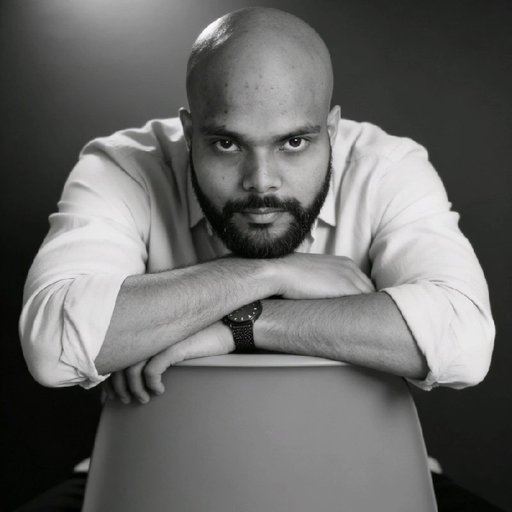
Learning AI filmmaking | AI Content Strategist | Helping AI & EdTech brands reach 500k+ audience | AI • Agentic AI • Automation | Collaborated with 100+ AI tools & Academies | DM for Collaboration 📩
Shailesh is a creator on Naano, where companies pay creators to write posts about their product.
Below: Shailesh's audience and recent posts.
€500per post, fixed price
You approve the post before it goes live
Looking for Shailesh? View LinkedIn profileView X profileA creator yourself? Create your own page
Over the past 2 years, I have worked hands-on with 100+ AI tools and collaborated directly with platforms like InVideo, Luma AI, Higgsfield, Arcads, Typeless, and Ribbi. I tested InVideo's AI video engine to produce a complete short film from script to final cut. I used Luma AI for visual generation workflows that replaced traditional production steps. I worked with Higgsfield on AI video content when the technology was still early and undocumented. I built content use cases with Arcads to show how AI-generated ad creatives perform against traditional ones. I explored Typeless for transcription-to-content pipelines. I used Ribbi's 24-skill agent to test what a single-prompt creative workflow actually looks like in practice. Each collaboration gave me something most AI commentators do not have: production-level experience with the tools, not just surface-level reviews. That experience feeds directly into my content. LinkedIn (43K+ followers), X (26K+ learners), and a weekly newsletter (5K+ subscribers) - every piece I publish is built on workflows I have actually run. Posts consistently hit 100 to 500+ reactions because they are structured around real outputs, not opinions. Before AI content, I spent three years optimizing resumes at scale, screening 1,500+ and rewriting 500+ for ATS and recruiter impact. That work was pattern recognition applied to careers. Now I apply the same thinking to AI tools: what works, what breaks, and what is worth your time. I work with AI and EdTech brands to create content that educates, builds trust, and converts. For business inquiries, please contact me at [email removed] or DM me here! . . .
My most engaged audience
39% Engineering / Data
From 38 people who reacted to or commented on my posts
Public LinkedIn data · Oct 17, 2026
X
Public X data · Captured Oct 27, 2026
Shailesh Shakya
Most AI filmmakers don’t need more shots. They need the right coverage. A scene can look beautiful shot by shot and still fall apart in the edit because every generation was made in isolation. That’s why I like thinking in 5 simple shot jobs: → Master / Wide = where are we? → Medium / Interaction = what are the characters doing together? → Close-up / Reaction = what is the important emotional beat? → Insert / Detail = what object or action matters? → Cutaway / Secondary reaction = where can the editor cut next? Imagine a diner scene. A woman meets a man. He secretly slides a key across the table. You don’t need 12 random cinematic angles. You need: → Wide: establish both characters and the diner → Medium: show their conversation and the key being slid → Close-up: show her realization → Insert: show the key → Cutaway: show him checking the entrance Now every shot adds information. That’s the part many AI creators miss. A cool orbit shot may look impressive. But if it doesn’t help geography, emotion, action, detail, or editing, it may just be another expensive clip you can’t use. One more rule: You do not always need all five. Use only what the scene needs. But before generating another shot, ask: → Do I have geography? → Do I have interaction? → Do I have the emotional beat? → Do I have the important detail? → Do I have somewhere useful to cut? And keep screen direction, props, character positions, costume, and lighting consistent across them. The takeaway: good coverage is not about generating more shots. It is about generating the right shots to build an editable story. Join my newsletter: https://lnkd.in/gu_6fpTk . .
Shailesh Shakya
Adding “85mm lens, f/1.8” to your AI prompt wont magically make your video cinematic. Most AI creators use camera terms without understanding what they actually change. Heres what you should know: → 24mm lens: Wider view. Shows more of the characters surroundings. → 85mm lens: Narrower view. Useful for close-ups and isolating reactions. → f/1.8 vs f/8: Wider apertures generally blur more of the background. Smaller apertures keep more in focus. → Rack focus: Shifts focus from one subject to another without moving the camera. → 180° shutter at 24fps: A 1/48-second exposure, commonly used for natural cinematic motion blur. But heres what most beginners misunderstand: Focal length doesnt control perspective. Camera position does. Instead of prompting: 85mm, f/1.8, cinematic shot. Try: Medium close-up from several meters away. Eyes sharply focused, distant mountains softly blurred. Camera stays still. AI understands visual instructions better when you describe the intended result, not just technical settings. The secret isnt knowing more camera terms. Its knowing what each one actually does to your shot. . . .
Shailesh Shakya
Here is how to make this: 1. Go to Midjourney 2. Ask it for a character 3. Once you have character, go to Midjoureny and ask it to generate the character 3. Repeat the same process for CAR 4. Next go to ChatGPT >> upload one image and ask it to generate a character sheet. Do the same for both 5. Give a situation to ChatGPT and ask it to create a 3x3 Storyboard 5. Now, go to Seedance 2.0 and upload storyboard and ask it to generate the full video. Done... I hope it helps you! if so, please follow me, repost, leave your thoughts. . . .
Choose a format for your next LinkedIn collaboration.
A dedicated post to introduce your brand to my audience.
Not taking bookings on LinkedIn right now.
Choose a format for your next X collaboration.
A dedicated post to introduce your brand to my audience.
Quotes your X post with their own comment.
Not taking bookings on X right now.
Your collaboration, managed on Naano
How does this price compare? B2B creator rates 2026
Based on 38 people who reacted to or commented on my posts. Percentages use the profiles that could be classified.
Based on 38 people who reacted to or commented on my posts. Percentages use the profiles that could be classified.
Based on 38 people who reacted to or commented on my posts. Percentages use the profiles that could be classified.
Based on 38 people who reacted to or commented on my posts. Percentages use the profiles that could be classified.
Sample of 300 public X follower profiles. Public X data, not the audience of a specific post. This follower sample is partial.
X
@grok what's wrong with this
@grok drive more people to this
Prompt https://t.co/EQCjNMxdn5
@grok what do you think about this?
Grab the prompt + Join my newsletter (https://t.co/TlUeKtm4fd): https://t.co/m5xANzZdCm . . https://t.co/VRA5KcxGfs
Storefront by Naano · Create yours
Shailesh Shakya is a B2B LinkedIn creator based in India with 45,304 followers, posting about AI, Productivity, and Creative. On Naano, one sponsored LinkedIn post by Shailesh Shakya costs €500, a fixed price per post. A sponsored X post costs €625. Shailesh Shakya is not taking new bookings right now.
The Naano team casts the creators, writes the briefs, reviews every draft with you and reports results per creator. You approve the shortlist and every draft.