Sponsored LinkedIn post
A dedicated post to introduce your brand to my audience.
Commercial Co-Founder @ GAIA Civil
Companies pay David to write a post about their product on LinkedIn.
This page is where they book it. Below: David's audience, recent posts and price. Naano, the platform behind this page, handles the brief, your approval of the post and the payment.
€1,250per post, fixed price
or 6 posts for €4,375 · You approve the post before it goes live
Looking for David? View LinkedIn profileA creator yourself? Create your own page
🏗️Construction Influencer | 160K+ Followers | Commercial Co-Founder, GAIA Civil — AI opportunity intelligence for geosynthetics sales | Geotechnical Engineer | Helping Construction Brands Grow🌎
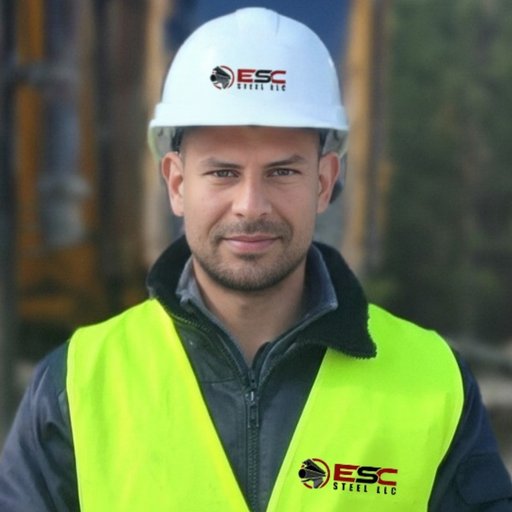
Most agencies can't tell an excavator from a wheel loader. I can, and I'll help you sell. 👋 I'm David — a Geotechnical Engineer turned Business Development & Marketing Strategist. 12+ years in the field and the office across Europe, Australia and Latin America (AECOM, Keller, WSP, ARUP and many more). I've been on both sides of the buying table: first buying technical solutions, now helping companies sell them. Today I do that in three ways: 🌱 GAIA Civil — Commercial Co-Founder AI opportunity intelligence for geosynthetics manufacturers and distributors. GAIA Civil reads the plans, specs and addenda, and returns a source-linked opportunity record — where your product is specified, where a competitor's is, where an or-equal opens — with the page and sheet to prove it. GAIA Civil prepares. Your team decides. I lead go-to-market and partnerships, and I'm the one who insists that every finding carries its page. First step: a Spec Check on ten of your recent projects. 👉 gaiacivil.ai ⚙️ Geo Civil Consulting — Sales & Marketing for technical buyers For suppliers, contractors, dealers, OEMs, construction-tech teams and startups selling to engineers: 🔧 Sales & Marketing Consulting — positioning, offer design, buyer personas, value proposition, pipeline plan, objection handling, AI prospecting workshops. Built for long technical buying cycles. 🌍 Market Entry & Export — go-to-market plans for EU, North America and LATAM. 🚀 Start-up Advisory — ideal customer, pricing/packaging, first pipeline plan. 📈 LinkedIn Strategy & Content (B2B) — narrative, positioning and content systems that turn attention into meetings. 🏗️ Equipment Sales Support — buyer outreach, positioning and deal coordination for new and used construction equipment. 👉 geocivilconsulting.com 🤝 LinkedIn Partnerships (Sponsored Content) One of the largest technical communities in civil/construction on LinkedIn: 160,000+ followers · ~36M+ annual views · Civil Engineering · Construction · Mining · Oil & Gas ▶️ Sponsored content (video, carousel, educational posts) · 📣 Content consulting for your team · ✍️ Co-authored thought leadership I'm also Engineering Director at ESC Steel LLC — vinyl sheet piles and steel foundation solutions for ports, energy and civil infrastructure across the Americas. 👉 escsteel.com Great engineering solutions deserve great reach — not just great specs. 📩 Let's connect — whether you sell geosynthetics and want to see what your bid queue is hiding, need a growth or market-entry plan, or want to amplify your innovation.
LinkedIn export · Oct 22, 2025 – Oct 21, 2026 · Provided by the creator, not independently verified by Naano
David Jasinski
Fresh concrete is not a solid. Welcome to #MondaySafetyCheck #12 🧱 Concrete is a liquid that weighs 2.5 times more than water. That single fact explains what you see in this video. A vertical wall pour, and the formwork starts to give way at the bottom. First a leak, then a bulge, then the whole system breaks open and the concrete pours out, tearing the shuttering apart. Why at the bottom? Physics. Freshly placed concrete behaves like a dense fluid with a unit weight of around 24 kN/m³. The lateral pressure grows with depth, so the highest load always sits at the base of the wall. On a tall pour placed quickly, that pressure can exceed 50 kPa: roughly 5 tonnes pushing on every square metre of formwork. And here’s the part many crews underestimate: the pressure depends heavily on how fast you pour. Concrete stiffens over time, and stiffened concrete stops pushing. Pour faster than it sets, and the full liquid head builds up. Cold weather, retarders, and over-vibration near the base all slow the stiffening and drive the pressure even higher. What keeps a pour like this safe: → Formwork designed for calculated pressure, not for “it held last time” → A maximum pour rate defined before the truck arrives, and respected → Ties, walers, and bracing inspected before the pour, especially at the base → Someone walking the forms during placement, watching for deflection, leaks, and creaking, with authority to stop the pour A blowout gives almost no warning. Slurry leaking at a joint is often the only signal before sudden failure. Formwork is temporary. The consequences of getting it wrong are not. Have you ever had to stop a pour because the forms didn’t look right? What did you see?
David Jasinski
An 85-foot deep soil mixing rig tipped over in Miami yesterday. In 2026. Monday, 8 a.m., Brickell Bay Drive. A 26 m (85 ft) rig, blending cement into the ground to form columns for the foundations of a 54-story tower, came down across the site boundary. It landed on a site container with two workers inside, 27 and 29, and on three vehicles. One SUV caught fire; the driver saw the mast coming, reversed, and climbed out the back. The operator, 47, jumped clear as it went over. Four people in hospital, all stable. Zero dead. The fire chief called it a remarkable day. I call it luck. The cause is under investigation and I will not guess. But anyone who has stood next to a tracked rig knows what keeps it vertical: → A ground investigation that covers the top 2 to 3 m, not only the bearing layer deep below → A working platform (the engineered ground the rig stands on) designed for real track pressures, including the mast-up case → A platform that is inspected and re-checked after rain, excavation or trenching → A crew that is allowed to say "stop" BRE 470 is over 20 years old. The EFFC/DFI working platform guide has been out for years. Knowledge is not the gap. Applying it every single day is. This is Brickell's second heavy equipment collapse in about six weeks. Someone will carry responsibility here, and it should be significant. Four people walking away is not a safety outcome. It is a fluke. What is the hardest part of getting working platforms taken seriously on your sites? 🎥 by teodorathompson (IG)
David Jasinski
Falls kill more construction workers than anything else 🪢 This one didn’t. #MondaySafetyCheck 16 This worker in Brazil is alive because of a few straps and a metal ring. Watch what happens after the harness catches him. The footage shows a man dangling at height after a fall. From what you can see, without the harness this ends with a funeral, or at best months in hospital with multiple fractures. Instead, he’s hanging there, shaken, waiting. Falls from height remain the single biggest killer in construction worldwide. In most countries with reliable data they account for roughly a third of all construction deaths. Brazil’s own regulation, NR-35, treats anything above 2 m (6.5 ft) as work at height for exactly that reason: the ground doesn’t need to be far away to kill you. So the harness worked. But here’s the part most crews never plan for: what happens in the minutes after. A worker suspended motionless in a standard harness is in a new emergency. The leg straps compress the veins in the thighs, blood pools in the legs, and the brain starts losing supply. Loss of consciousness can begin within minutes. It’s called suspension trauma, and it’s why every fall arrest plan needs a rescue plan attached to it. What this video should make you check on your own site tomorrow: → Is the anchor point rated for the load, and is it above the worker, not at their feet? → Does everyone know how to get a suspended colleague down, and in how many minutes? → Are workers trained to move their legs and push against a wall while they wait? The harness caught him. The crew’s rescue plan decides whether that was a save or only a delay. Have you ever seen a harness arrest a fall on your site? How long did it take to get the person down?
Choose a format for your next LinkedIn collaboration.
A dedicated post to introduce your brand to my audience.
A series of posts to build visibility over time.
Reposts your LinkedIn post to my network.
Reposts your LinkedIn post with my own comment.
Your collaboration, managed on Naano
How does this price compare? B2B creator rates 2026
People who saw my posts, from my LinkedIn export.
People who saw my posts, from my LinkedIn export.
People who saw my posts, from my LinkedIn export.
I had the pleasure of working with David in the context of our Brextor system – an innovative solution in the field of pile head processing. David is not only highly professional and reliable, but also incredibly impactful in how he communicates complex engineering topics in an engaging, accessible way. His work reached a wide audience and generated strong interest, and his messaging was spot-on – highlighting the real-world benefits of the system with clarity and credibility. David understands the construction industry, knows how to connect with the right audience, and delivers results.
Storefront by Naano · Create yours
David Jasinski is a B2B LinkedIn creator based in the United States with 163,632 followers, posting about Sales and Marketing. On Naano, one sponsored LinkedIn post by David Jasinski costs €1,250, a fixed price per post.
The Naano team casts the creators, writes the briefs, reviews every draft with you and reports results per creator. You approve the shortlist and every draft.