Sponsored LinkedIn post
A dedicated post to introduce your brand to my audience.
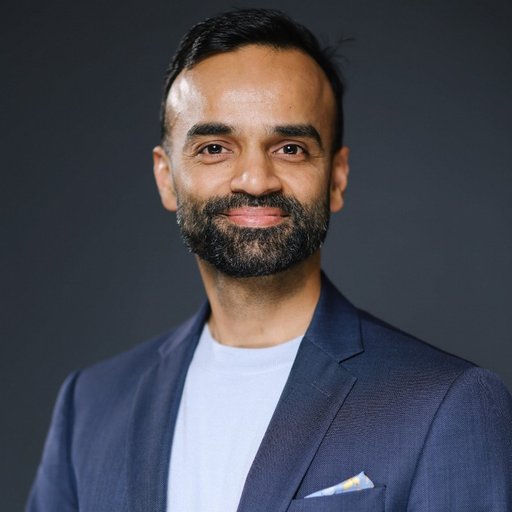
Country HR Head - ADP Czech Republic
Ganesh is a creator on Naano, where companies pay creators to write posts about their product.
Below: Ganesh's audience and recent posts.
€525per post, fixed price
You approve the post before it goes live
Looking for Ganesh? View LinkedIn profileA creator yourself? Create your own page
Hey there! I'm an HR Leader with a keen interest into the business world. Throughout this journey, I've proudly led and grown diverse teams, ranging from small groups of 10 to mega teams of 30+ supporting wider range of businesses upto 15k+ FTEs. My experience spans managing global teams. Being a visionary at heart, I've always focused not just on the tasks at hand, but also on nurturing and fostering growth in the people I work with and environments I was part of. It's not just about leading, but inspiring and building future leaders. I've also had the chance to collaborate with multi-cultural teams worldwide, giving businesses that special transformative touch. Passionate about an inclusive and forward-thinking people culture. My expertise lies in performance management, talent management, leadership development, employee engagement, employee relations, process excellence, and HR technology. I am passionate about creating and enhancing a remarkable culture and an excellent employee experience, while delivering results, collaboration, and agility.
My most engaged audience
34% VP / Head / Director · 39% HR / Talent
From 69 people who reacted to or commented on my posts
Public LinkedIn data · Oct 1, 2026
Ganesh Iyer
"The 4:47 PM Decision" It's late afternoon. The calendar says the day is done one meeting left, "wrap-up," thirty minutes, nothing flagged. Then the message comes in..... A manager wants to terminate someone today. A high performer just quietly resigned, and the exit interview notes point at a pattern nobody escalated. A pay disparity surfaces in a routine audit, three years old, and legal is asking what HR knew and when. None of it was on the calendar. All of it lands on one desk. this is the part of HR that never makes the slide deck. Not the policy document, not the town hall, not the neatly designed framework : the moment where you have partial information, a business that wants an answer in the next hour, and a person on the other end of the decision whose year (sometimes whose career) turns on how carefully you think it through. There's a version of leadership that waits for certainty. HR doesn't get that luxury. You take what you have: the labour code, the precedent, the values on the wall, the read of the room — and you move. Not recklessly. Deliberately!!! but without the safety net of knowing for certain you're right. You gather the legal view, you weigh the human one, and then you decide, because someone has to, and today it's you. That's the muscle that actually matters: not having all the answers, but being willing to work through the ones you don't have, every single time, without letting the pressure make the decision for you. It's easy to think this only shows up at the top, in the boardroom, the policy owner setting direction. - It doesn't. It shows up in the HRBP mediating a conflict between two managers who both think they're right. - It shows up in the recruiter who has to tell a candidate the offer changed. - It shows up in the generalist reading a resignation letter twice, looking for what it isn't saying. Every layer of HR carries a version of that 4:47 PM moment. The scope changes. The weight of the decision doesn't. What separates the leaders who hold up under that weight isn't confidence it's the willingness to keep going back into the ambiguity instead of around it. To sit with an associate's file, an unclear clause, a heated escalation, and stay in it until there's an answer that's both defensible and human. Not because it's comfortable. Because that's the job So the next time someone asks scope of HR actually this is the honest answer: we sit at the point where policy meets a real person's real Tuesday, and we're the ones who don't get to say "not my call." We make the call. We live with it. And tomorrow, at some equally unplanned hour, we do it again. That's not a burden. That's the pivot point the whole organisation quietly depends on. #HR #HumanResources #People #WorkplaceCulture Dave Ulrich Liz Ryan
Ganesh Iyer
HR doesn't need more dashboards . .. ... There's more HR technology today than at any point in the history of this function. Predictive attrition models>>AI-driven engagement scores>>Real-time dashboards for everything. And still, the hardest decisions inside an "HR team" rarely start with a dashboard. - recruiter deciding whether to give a candidate a second chance after a rough interview day. - HR business partner sitting across from a manager who needs to hear something they don't want to hear. - people ops quietly checking in on someone who's gone unusually quiet in meetings. - compensation trying to explain a decision that no spreadsheet can make feel fair on its own. - L&D partner watching a culture problem finally surface in the data, months after it actually started. None of these moments show up as a metric until it's almost too late. By the time the dashboard flags it, someone on the team already Felt It. This is what makes HR different from almost every other function that technology has transformed. The systems can tell you what happened. They can even predict what's likely to happen next. But they cannot sit in the room, read the pause before someone answers, or decide how much grace a moment actually needs. Technology is amplifying that judgment, not replacing the need for it. The moment a team starts trusting the dashboard more than the conversation, something essential about the function gets lost — not the process, the purpose. Modernize the systems. Every team should. . But never outsource the judgment. That part was never the job of the technology to begin with. It's the part that makes HR, at every level, feel less like a function and more like a responsibility people carry for each other. #hr #people #culture
Ganesh Iyer
"Talent Density Playbook" I read something that put language to a belief I've carried for years across regions: "your org chart is not your culture. Your talent bar is" Sequoia Capital's Zoe Jervier Hewitt and Revolut's Georgian Andrei Oprisor sat down for a webinar on "talent density" — and it reads less like HR theory and more like a battle plan for anyone scaling a team through hypergrowth. Here's what stopped me mid-scroll: - Hiring fast is not hiring well. warning is blunt — speed-hiring, unstructured interviews, and chasing a logo on a resume instead of real problem-solving ability are the three fastest ways to quietly dilute a team. They this with three non-negotiable pillars: proven capacity to deliver, observable skills (not theoretical answers), and genuine value alignment — not just "culture fit," but people who add to the culture. I've run this exact playbook building GCC models across India, the Philippines, and shoring centres. The moment you let "we need someone now" override "we need the right someone," you're not solving a resourcing problem — you're planting a retention problem two years out. Tell me if you haven't faced it !! - Performance is a rhythm, not an event No annual review can keep pace with a business that pivots quarterly. Revolut leans on continuous check-ins, 360° calibration, and goals that cascade from company strategy down to the individual. This is where performance and recognition are supposed to be in sync, cause if recognition and goals aren't connected in real time, you're managing performance by rear-view mirror. - Engagement isn't a perk problem — it's a purpose problem "You don't want an organisation of mercenaries. You want visionary employees." Gallup backs this with hard numbers — highly engaged teams are 21% more profitable. But the lever isn't more benefits. It's stretch assignments, visible recognition (Revolut's CEO-led "10x Awards"), and knowing what your top performers are actually chasing in their careers. - Protecting your culture sometimes means letting go — with dignity This is the part leadership content skips. be "clear, direct, and kind." Delaying an exit to preserve a "nice" culture isn't kindness — it's cowardice dressed up as compassion, and it costs you your high performers' trust. I've sat across the table in exactly these conversations. Handled with respect, your alumni become your best recruiters. Handled badly, they become your loudest critics. The bigger idea: talent density isn't built in one big moment. It's the compound interest of a hundred small disciplines — who you hire — how often you calibrate — what you reward — and how you exit Get the system right, and performance + innovation take care of themselves. What's the discipline that's made the biggest difference in your team's talent density? #TalentDensity #HRLeadership #PeopleStrategy #HighPerformanceCulture #Hypergrowth #HR #People Dave Ulrich
Choose a format for your next LinkedIn collaboration.
A dedicated post to introduce your brand to my audience.
This creator is not accepting new bookings at the moment.
Your collaboration, managed on Naano
How does this price compare? B2B creator rates 2026
Based on 69 people who reacted to or commented on my posts. Percentages use the profiles that could be classified.
Based on 69 people who reacted to or commented on my posts. Percentages use the profiles that could be classified.
Based on 69 people who reacted to or commented on my posts. Percentages use the profiles that could be classified.
Based on 69 people who reacted to or commented on my posts. Percentages use the profiles that could be classified.
Storefront by Naano · Create yours
Ganesh Iyer is a B2B LinkedIn creator based in Czechia with 32,572 followers, posting about Growth / GTM, HR, and Recruiting / Talent. On Naano, one sponsored LinkedIn post by Ganesh Iyer costs €525, a fixed price per post. Ganesh Iyer is not taking new bookings right now.
The Naano team casts the creators, writes the briefs, reviews every draft with you and reports results per creator. You approve the shortlist and every draft.