Sponsored LinkedIn post
A dedicated post to introduce your brand to my audience.
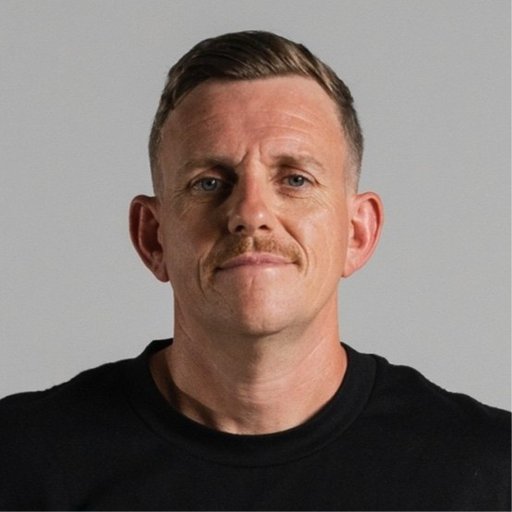
Co-Founder @ TWL
Companies pay Andy to write a post about their product on LinkedIn.
This page is where they book it. Below: Andy's audience, recent posts and price. Naano, the platform behind this page, handles the brief, your approval of the post and the payment.
€94per post, fixed price
or 5 posts for €375 · You approve the post before it goes live
1 collaboration on Naano, delivered on time
Looking for Andy? View LinkedIn profileA creator yourself? Create your own page
Co-Founder of TWL (Train Without Limits), building a global performance and apparel brand from a credit-card-backed startup into a multi-million-dollar ecommerce business. Mission-driven and deeply invested in the long game of brand, community, and culture. Using content and commerce to bring people together, create momentum, and build something meaningful alongside great humans. Most of the lessons I value didn’t come from wins, but from mistakes, setbacks, and the work required to adapt and evolve over 13+ years in business. My background spans corporate finance, banking, and accounting, with hands-on experience across ecommerce, digital marketing, leadership, and team building. Learning by doing, building by building. Formally trained with a Double Degree in Law and Commerce, with a Graduate Diploma of Chartered Accounting through The Institute of Chartered Accountants in Australia, and admitted to practice through the Law Society of South Australia and the Supreme Court of South Australia. Always open to meaningful conversations, long-term thinking, and opportunities where values, ambition, and execution align.
LinkedIn export · Aug 7, 2026 – Nov 4, 2026 · Provided by the creator, not independently verified by Naano
Andy Lee
Garmin just launched a screenless band at $199 with no mandatory subscription. Everyone's calling it a WHOOP killer. It isn't. It's worse than that. Here's what actually happened this week. Whoop's entire business is a subscription. The hardware is free-ish because the recurring revenue is the product. $199 to $359 a year, forever, or your data goes dark. Garmin just walked in and made the core of that free. Buy the Cirqa once. $199. Keep your biometrics, sleep, HR, SpO2, 80+ auto-tracked activities. Optional Connect+ at $6.99/month if you want the coaching layer. Same category. Opposite business model. That's not a competitor. That's a company deciding your revenue model shouldn't exist. And Garmin can afford to do it, because they're not a subscription business defending a subscription business. They sell watches, bike computers, chartplotters, aviation gear. The band doesn't have to be profitable. It just has to keep you inside Garmin Connect. Whoop has one moat: the subscription. Garmin has an ecosystem and used the band as a moat-filling exercise. Now look at the rest of the shelf. Fitbit Air at $99. Amazfit Helio with a free tier. Amazfit already holding official timekeeper status at HYROX, which is where this customer actually lives. Twelve months ago Whoop owned a category. Today it's a crowded aisle where they're the most expensive option and the only one that stops working when you stop paying. Here's the retail lesson, and it's got nothing to do with wearables: If your competitive advantage is a payment schedule, you don't have a competitive advantage. You have a pricing decision that someone bigger can undo on a Tuesday. Whoop's real asset was never the strap. It was recovery scores people organised their training around, and a community that talked about them. Habit and identity. That's defensible. The subscription was just how they charged for it. If they've spent five years confusing the two, this is going to hurt. My call: not a Whoop killer. A Whoop repricer. Whoop survives, but at a number that looks a lot more like $6.99 than $359. Anyone still paying full freight after this? #Wearables #Whoop #Garmin #Fitness #Retail #DTC
Andy Lee
I wrote about Salomon a fortnight ago. Today the same group bought the biggest slice of Puma. ANTA Sportswear has completed its purchase of 29.06% of PUMA Group (Puma SE) from Artémis, the Pinault family holding company, for €1.5 billion in cash. It's now Puma's largest shareholder. It's seeking seats on the supervisory board. It says it has no plans for a takeover. Here's the list most people haven't joined up. ANTA owns or is the largest shareholder in: ANTA. FILA. Descente. Kolon Sport. Jack Wolfskin. Maia Active. Arc'teryx. Salomon. Wilson. Atomic. Peak Performance. And now Puma. Sit with that from a buying desk. I deal with what feel like separate brands, separate reps, separate terms, separate allocations. Behind an increasing number of them sits the same balance sheet. Nobody is saying that changes anything today, and I don't think it does. But ANTA's own strategy statement is single-focus, multi-brand, globalisation. The chairman's stated logic is that a multi-brand group creates value by lending group capabilities to each brand, with retail and operations named specifically. Shared retail muscle is excellent for the brands. It is a different conversation for whoever sits on the other side of the table. Two details worth noticing. The stake is 29.06%. In Germany, 30% triggers a mandatory takeover offer. That number isn't an accident. And China gets mentioned twice in the release as Puma's untapped potential. That's the actual thesis. ANTA took FILA, a brand going nowhere in China, and turned it into one of the largest sportswear businesses in the country. That playbook is the reason this deal exists. Puma couldn't buy that route on its own at any price. So I'd be careful reading this as a struggling brand getting bailed out. It's closer to a distribution deal wearing an equity structure. For retailers, though, the slow story is the one worth watching. Our supplier lists are getting shorter without a single brand disappearing. Fellow buyers: does group ownership behind your brands change how you negotiate, or do you treat each account as if nothing happened? #ANTA #PUMA #Sportswear #Retail #Ecommerce
Andy Lee
Hoka had IRONMAN for nine years. Salomon just took the next five. Announced this month in Nice. Salomon becomes IRONMAN’s Global Premier Partner through 2031, exclusive on performance footwear, apparel and technical bags. Every run leg at an IRONMAN-owned race becomes the Salomon Run Course, with the name on seven more races from Lake Placid to Lanzarote to Oceanside, and the title partner at Kona in 2027. Strange, if you think about who Salomon is. A trail and mountain brand. Triathlon is flat, hot, and finishes with a road marathon. The cheque is the least interesting part. Trail apparel is built against cold, wind and abrasion. Racing long in heat is a different engineering problem. Salt, chafe, and hours of friction in the same three places. Different fabric weight, different seam construction, different finish. Signing the race takes an afternoon. Building a line that survives Kona takes a year of samples, and samples are where these things actually get won or lost. Which is why the timing matters more than the money. Salomon has already signed Marjolaine Pierre, Julie Iemmolo and Casper Stornes, the 2026 world champion. It’s running a Kona pop-up this month, a full year before the naming rights begin. That isn’t impatience. That’s a brand buying twelve months of wear-testing on the actual course before it has to sell anything there. Signing athletes in 2026 for a 2027 contract is a product development decision dressed as a sponsorship. And it tells you the range doesn’t exist yet. Which is the real question for Hoka. Nine years of association just evaporated in one announcement, but the shoes on the start line in Kona next October will still mostly be theirs. Contracts move faster than feet. Salomon has one year to build something triathletes actually want, and a very expensive stage booked either way. Name a brand that bought its way into a sport and actually earned it. #Salomon #IRONMAN #Footwear #Retail #Ecommerce
Choose a format for your next LinkedIn collaboration.
A dedicated post to introduce your brand to my audience.
A series of posts to build visibility over time.
Your collaboration, managed on Naano
How does this price compare? B2B creator rates 2026
People who saw my posts, from my LinkedIn export.
People who saw my posts, from my LinkedIn export.
People who saw my posts, from my LinkedIn export.
People who saw my posts, from my LinkedIn export.
People who saw my posts, from my LinkedIn export.
Most people writing about e-commerce have never had to pay for the stock. I have. I'm Co-Founder of TWL, an Australian activewear and training footwear retailer. We buy Nike, adidas, Puma, Reebok, TYR and RAD on allocation and make our own product as well. That means committing real money to a forecast nine months before I find out whether I was right. That's the lens I write through. I read industry news by asking what it does to a buying decision: inventory, margin, cash, sell-through. My readers are e-commerce operators, DTC founders, retail buyers and B2B people in commerce, with a strong European readership as well as Australia. The numbers behind the seat: • 13 years building TWL from a bedroom into a 3,000 sqm warehouse • About 1M customers and 250k+ email and SMS subscribers • Roughly 40,000 pairs of training footwear sold in the last 12 months • 12.5K+ followers on LinkedIn
Formats: • Sponsored post: your product told through a real operating problem I've had at TWL (stock, cash flow, forecasting, conversion, wholesale) • Tool teardown: I use your product on live TWL work and write up what it did, including what it didn't do • Comment and repost support on your launch content Best fit: tools and services that operators actually buy. Inventory and demand planning, Shopify apps, 3PL and fulfilment, payments and finance, retention and email/SMS, creative and content, AI for commerce. Not a fit: anything I can't honestly use or recommend, or content that takes shots at the brands I buy from.
• I only post about products I've tested or can tie to a real decision at TWL. That's why the content gets read. • You get one strong draft to review before it goes live, plus one round of changes. • Links go in the first comment, not the post, so reach isn't throttled. • I space sponsored posts out so my feed stays mostly organic. Message me with the product and what you want operators to understand about it. I'll tell you straight whether there's a genuine story there.
Storefront by Naano · Create yours
Andy Lee is a B2B LinkedIn creator based in Australia with 12,856 followers, posting about Marketing, E-commerce, and Software. On Naano, one sponsored LinkedIn post by Andy Lee costs €94, a fixed price per post.
The Naano team casts the creators, writes the briefs, reviews every draft with you and reports results per creator. You approve the shortlist and every draft.